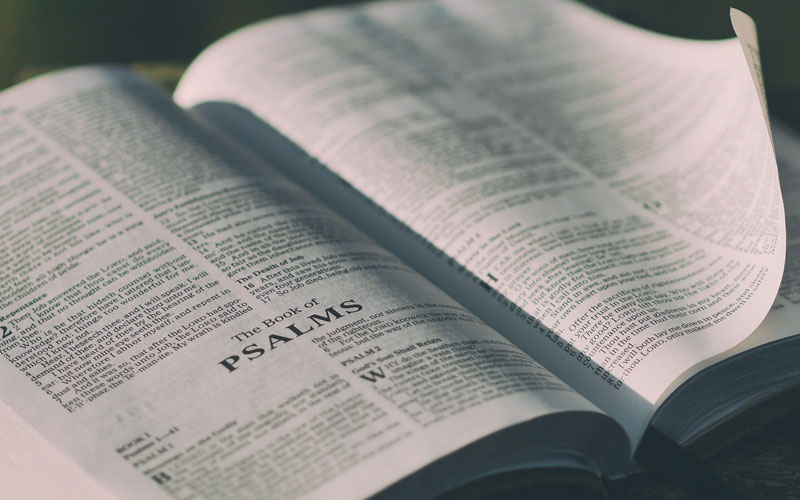
In the first psalm, we read of a sharp contrast between the righteous and the wicked. As we strive to be righteous and avoid wickedness, let us briefly consider the words of the psalmist.
“How blessed is the man who does not walk in the counsel of the wicked, nor stand in the path of sinners, nor sit in the seat of scoffers!” (Psalm 1:1).
This verse is often used to point out the progression that takes place as our familiarity with evil grows (from walking, to standing, to sitting). The fact that sin is progressive is certainly true (2 Timothy 3:13), but there is more to this verse than just that point.
Notice the things that the righteous man does not do. He does not walk in the counsel of the wicked in that he does not follow their thinking or heed their advice. He does not stand in the path of sinners, putting himself unnecessarily in a position to be influenced by them. He does not sit in the seat of the scoffers, learning how to grumble and complain against others. These are things the righteous will not do.
“But his delight is in the law of the Lord, and in His law he meditates day and night” (Psalm 1:2).
The righteous man will not grudgingly listen to or accept God’s word. He delights in it, just as the noble-minded Bereans who “received the word with great eagerness” (Acts 17:11). He delights in God’s law because he recognizes the benefit of it – salvation (James 1:21), guidance (Psalm 119:105), instruction (2 Timothy 3:16-17), and more. If we delight in God’s law, we will not ignore it or forget it, but will think on it daily.
“He will be like a tree firmly planted by streams of water, which yields its fruit in its season and its leaf does not wither; and in whatever he does, he prospers” (Psalm 1:3).
In this verse we have a picture of stability and longevity. The righteous are deeply rooted and not easily shaken (1 Corinthians 15:58). As we study and meditate upon God’s law and put it into practice, we are nourished by it (1 Timothy 4:6) and bear fruit (Luke 8:8, 15; Galatians 5:22-23). As long as we continue, we will not wither or fade away (Hebrews 10:39).
The phrase, “in whatever he does, he prospers,” is not to be taken the way most would want to understand it today. The psalmist is not saying that if we follow God, we can have anything we desire. What it does teach is that when we do God’s will, we will prosper according to God’s will, which often will not be realized until after this life (Matthew 6:19-21; 1 Peter 1:3-4).
“The wicked are not so, but they are like chaff which the wind drives away. Therefore the wicked will not stand in the judgment, nor sinners in the assembly of the righteous” (Psalm 1:4-5).
The wicked are not like the righteous. They follow the counsel of other wicked people. They do not try to avoid sin. They are at home with the scoffers. They do not delight in God’s word. Therefore, they will not meditate upon it. They are not like the tree planted by the rivers of water.
The characteristics that resulted in the righteous being blessed are not found in the wicked. Therefore, they are like the chaff. They are worthless to the Lord as long as they continue in their wickedness. In this state, they cannot stand in judgment before Him and have no place among the people of God. With such strong language used in the psalm, we had better examine ourselves to make sure we have the traits of the righteous rather than the wicked (cf. 2 Corinthians 13:5).
“For the Lord knows the way of the righteous, but the way of the wicked will perish” (Psalm 1:6).
When the psalmist said that the Lord knows the way of the righteous, he was not referring to God’s omniscience – even though that certainly is a characteristic of God (Hebrews 4:13). In that sense, God knows the way of the wicked as well (hence the judgment mentioned in the previous verse). Instead, the psalmist was referring to the fact that God approves of the way of the righteous. Why? It is because it is God’s way. The righteousness of God is revealed in His word (Romans 1:16). Our responsibility is to follow it.
If we do not follow God’s righteousness, we will be classified with the wicked who will perish. We may choose sin, but we can only follow it so long before we must give an account. If that is your current path, do not keep going in that direction. Change your course and follow after God so that you may receive the blessings of the righteous.











This article is published in today’s edition of “Sound Doctrine”, the bulletin of the Vegas Valley Church Of CHRIST. Just thought you would like to know.
Great. Glad you could use it.